
The ‘Eyes and Ears’ Behind Harvard’s State Lobbying
The Association of Independent Colleges and Universities in Massachusetts is Harvard’s voice in the statehouse — and it’s using the University’s clashes in Washington to make the case for favorable policies closer to home.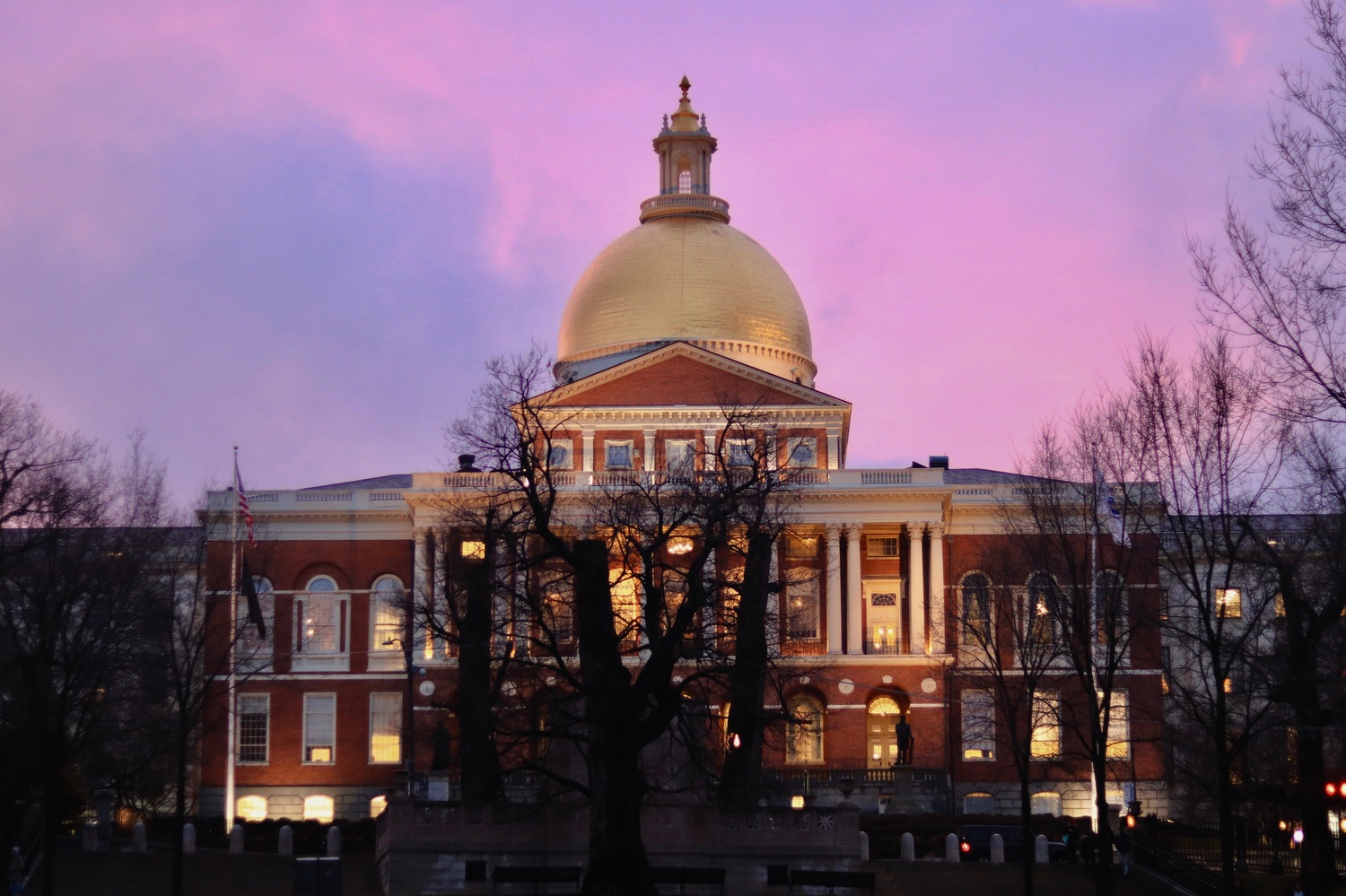
Amid multiple pending federal investigations, fights with a dozen federal agencies, and two high-profile lawsuits, Harvard’s clash with the federal government has been the main focus of attention for the past year.
But at the state level, the University has its own battles. Facing Massachusetts legislation that would levy new taxes on its endowment or mandate payments to city governments, Harvard has used the strain of new federal costs to argue that state lawmakers should not follow suit.
Harvard has worked closely with the Association of Independent Colleges and Universities in Massachusetts, an external group that acts as a go-between for legislators and the University’s own small army of government relations professionals — and that maintains a direct line to Harvard President Alan M. Garber ’76.
Though it employs three three disclosed state lobbyists — who are paid directly by Harvard to connect faculty to top legislators, help liaise with alumni groups, and stay up-to-date on the latest developments on Beacon Hill — the University relies most heavily on an AICUM.
The association, which Harvard has worked with for more than 50 years, is the real center of the University’s direct lobbying. It’s a small organization — with only four people on its team and ten on its board of directors — but it represents 57 private universities across Massachusetts.
Harvard spends thousands of dollars to maintain its AICUM membership status, paying $112,969 in 2024 in dues to the organization. The dues make up 83 percent of the University’s spending on membership dues to lobbying organizations; its other expenditures go to groups including the the Massachusetts Biotechnology Council, the Massachusetts Nonprofit Network, and the Greater Boston Chamber of Commerce.
The University also disclosed $346,100 in lobbying expenses to the state of Massachusetts in 2024. The sum includes $90,000 for the salaries of Harvard’s internal lobbyists and $72,000 to Tremont Strategies, which the University works with on the Allston I-90 Multimodal Project — an infrastructure overhaul that would replace current highway ramps with a new grid system that allows for development on University-owned land.
Harvard’s federal lobbying expenditures, meanwhile, have risen to $720,000 so far this year — exceeding every full-year total since George W. Bush’s presidency, even as the University reports its first budget deficit since the pandemic. On Harvard’s balance sheet, the dollars it spends on lobbying may be a small price to pay for insulation from lawmakers who are eager to strip back programs the University relies on or wring cash out of its coffers.
Pressures at the federal level have included research funding cuts, the elimination of Grad PLUS loans that help graduate students pay tuition, and an increase in the endowment tax that could cost Harvard $300 million per year.
The changes have made the University even more conscious of its bottom line — and provided ammunition for its fight against tax hikes in Massachusetts, where Harvard is currently facing two proposed bills on Beacon Hill that would raise its taxes.
State senator Adam Gómez put forward a bill that would impose an annual 2.5 percent excise tax on any colleges with an endowment over $1 billion — a tax that would easily apply to Harvard’s nearly $57 billion endowment. Another bill, proposed jointly by Massachusetts Rep. Marjorie C. Decker, who represents much of Harvard’s campus, would impose an endowment tax to fund recruitment and education initiatives in the healthcare industry.
As of December, neither bill has advanced out of committee.
The president of AICUM, Robert J. McCarron, said the association’s lobbyists have zeroed in on the parallels between the federal endowment tax hike — which Harvard officials have described as devastating — and state proposals. The federal threats to higher education should stop the state from passing its own, AICUM has argued.
“So we say, ‘Look at what — given what’s happened federally, any discussions about topics such as these are just wrong and will be just kind of layer on the harm that’s being done to such an important sector,’” McCarron said.
Payments in Lieu of Taxes are another hot-button issue on Beacon Hill. The programs, which ask tax-exempt nonprofits like Harvard to partially pay what they would otherwise pay in property taxes to help supplement a city’s budget, are voluntary.
That means Harvard has faced few consequences for regularly falling short of Boston’s PILOT requests. Some lawmakers are hoping to change that — a bill proposed this year would allow cities to mandate PILOT payments.
The bill was last heard by the Joint Committee on Revenue in early October. Bradley Freeman, AICUM vice president for government relations, testified against the PILOT legislation and endowment tax proposal at the October hearing — using recent federal attacks as a key argument against both legislative actions. He cited “a time of unparalleled attacks by the federal government against colleges and universities” in his testimony.
“As private non-profit colleges and universities respond to the potential loss of billions in federal research funding and federal financial aid dollars, adjust to the market impact of state-funded free college programs at public institutions, and demographic challenges, it would be devastating for institutions if municipalities imposed additional tax burdens,” Freeman said.
Freeman also emphasized the role of university endowments on student financial aid and research projects “that are already losing federal funding.”
“Incredibly, the scope of this proposal is significantly more punitive to colleges and universities than the federal endowment tax championed by congressional Republicans and targeted at institutions in so-called blue states,” Freeman said of the proposed endowment tax.
AICUM is the nexus between the legislature and higher education, according to McCarron. McCarron meets with university presidents — including Garber — at least annually. He last met with Garber virtually in the spring, as Harvard faced the research funding freeze and battles over international student enrollment. According to McCarron, the discussion with Garber centered on the legislation AICUM planned to prioritize at the state level.
McCarron also meets with other administrators, such as members of Harvard’s Office of the General Counsel and its internal lobbying team. Administrators provide feedback on specific legislation, adding any input that they want AICUM representatives to present in their meetings at the statehouse.
Meanawhile, McCarron also speaks with the top brass at Beacon Hill — the Senate president, the Speaker of the House, the Ways and Means Committee, or the governor’s office. Freeman, AICUM vice president, meets at the committee level — mainly with the chairs of the Revenue Committee and Higher Education Committee, the two most relevant to the legislation that AICUM follows.
“Information we provide them, they know it’s coming from kind of a broad coalition of members,” McCarron said. “I think it is kind of the best information they can get as to how a particular issue is going to affect the college or university.”
McCarron said he ultimately sees AICUM as the core of higher education advocacy for Harvard and peer institutions.
“We try to act as their government relations, their eyes and ears on issues, and make sure that they’re alerted to an issue that they need to be alerted to, or that we can tell them, ‘I don’t think you need to worry about this issue.’”
—Staff writer Megan L. Blonigen can be reached at megan.blonigen@thecrimson.com. Follow her on X at @MeganBlonigen.